Dynamic Pricing Droplabs as a tool for shaping tourist behavior
This post is the third part of a larger article”AI at the service of heritage: Dynamic Pricing Droplabs and attendance prediction in shaping sustainable tourism behaviour in TPN“. In the second part, you can delve into technological aspect of AI solutions used in TPN << we invite you to read!. Part 4 will address the question of how professional data monitoring, can help you achieve the goals of the organization >> welcome to read!
Challenge and solution
The effective attendance forecast described in part one is one thing. The key objective of TPN was to influence the behavior of tourists. The lack of advance reservation of parking at the start of the trail to Morskie Oka meant that drivers without a guarantee of a place generated serious congestion on the access road. This resulted in access being blocked for disciplined people who bought a ticket in advance and had a guaranteed stop. Worse, idle, piled traffic means excessive exhaust emissions, which negatively affects the priceless ecosystem of the Tatra Mountains. Forcing online reservations has therefore become a key tool both logistical and pro-ecological.
The solution that the Park managers opted for was the online sales system and automatic Dynamic Pricing Droplabs. This Polish company is the first in Poland to provide a system of dynamic price management for tourist attractions based on machine learning (AI) mechanisms.
Instead of one fixed price for parking, the year is divided into several seasons. For each of the seasons there are fixed ranges: the minimum price available online or offline at the Tourist Information Center and the prices at the parking ticket office.
Minimum parking prices start from PLN 36 for the entire day of parking. However, this price increases to PLN 65 if you buy the ticket directly on the spot, without prior reservation. In high season: the lowest price booked in advance is PLN 55, while the purchase without reservation on site costs PLN 85. Interestingly, hardly anyone actually pays the maximum prices! Online participation is as much as 80-90% of the total attendance.
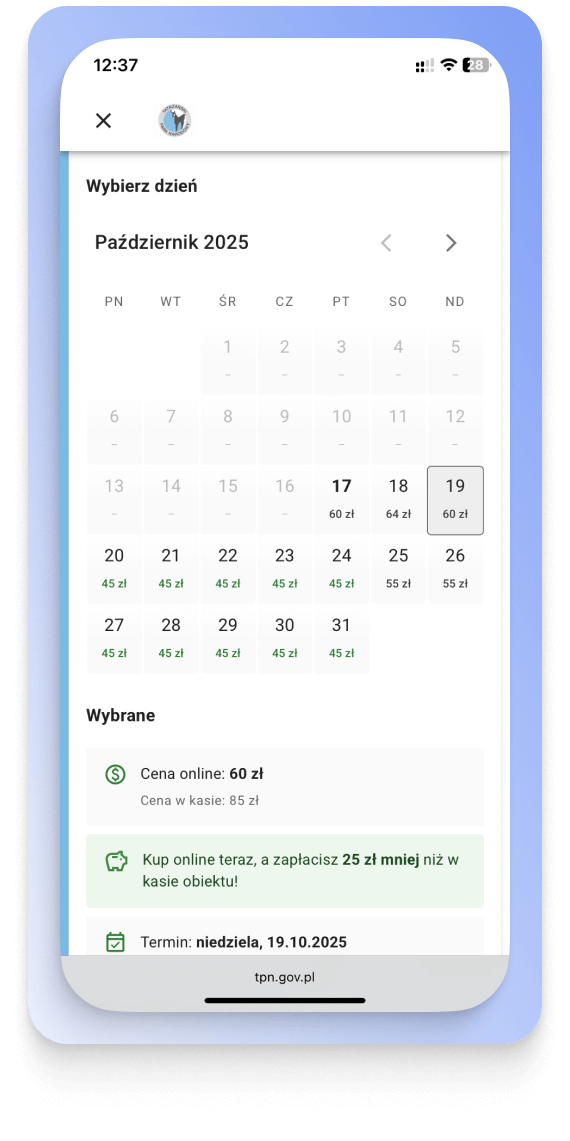
Droplabs algorithms actively raise this price in such a way as not to negatively affect the interest in the offer and to motivate drivers to buy online earlier, which is crucial for traffic management and reducing congestion.
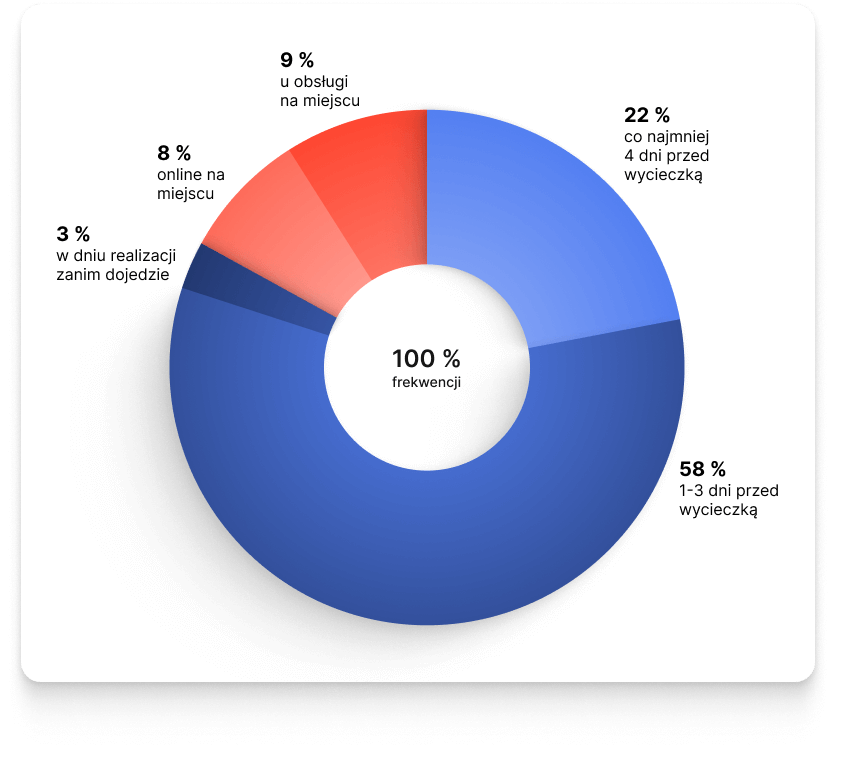
The analysis of ticket purchases during the holiday season (July - August 2025) clearly indicates the success of the sales strategy implemented by the Tatra National Park. The majority of tourists, representing as many as 83% of customers buy a ticket before they arrive (blue-navy color in the chart below). Only every fifth tourist (represented by the red zone in the graph below) buys a ticket only after arriving at the parking lot. As a result, this system minimizes unplanned traffic, traffic congestion and exhaust emissions.
What is interesting more than 90% of tourists have a parking ticket purchased through the onlin channele, which consists of tourists buying before they arrive (83%) and online shoppers already on the spot (8%).
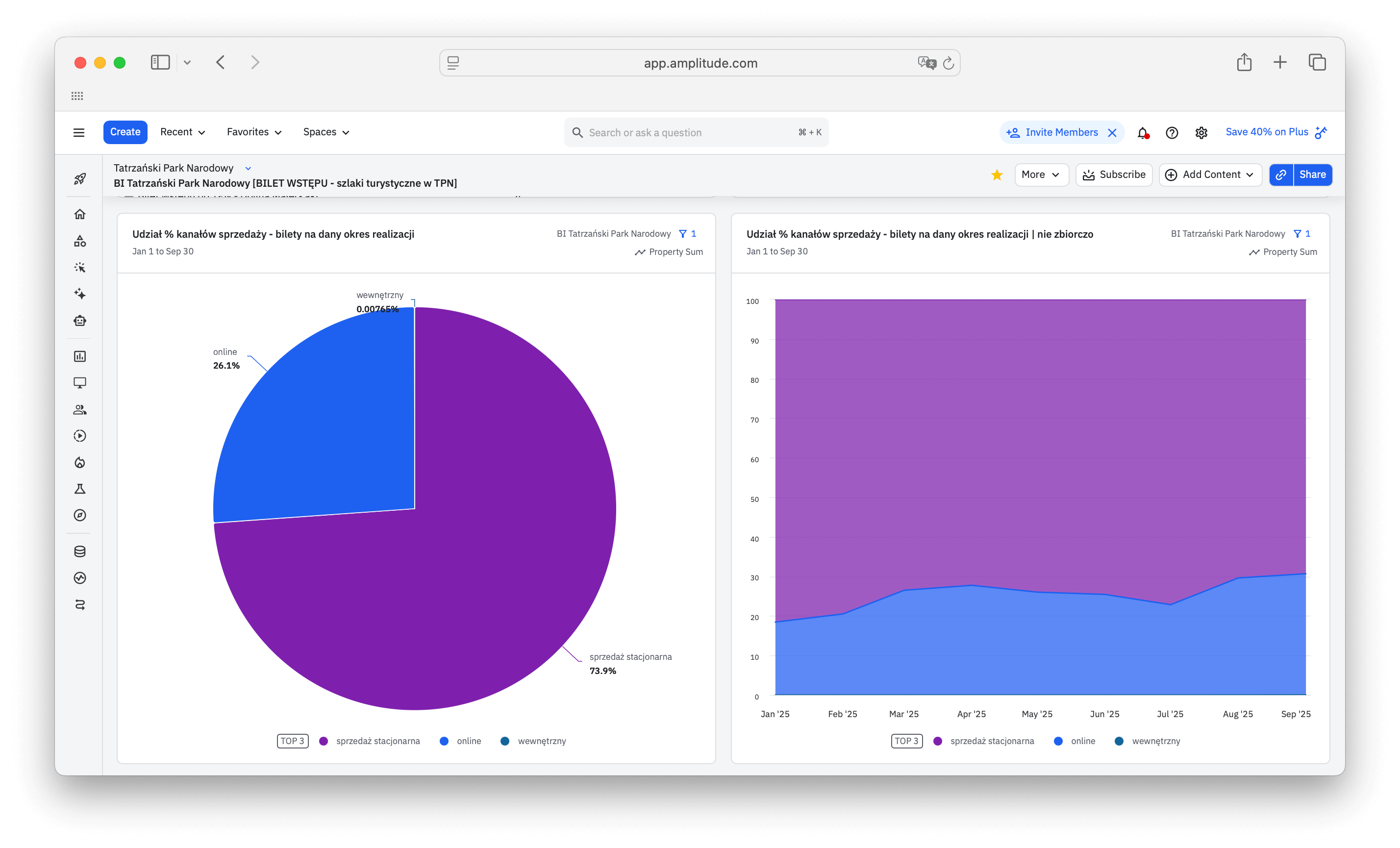
The analysis of the data from the whole year clearly confirms the fundamental change in the behavior of tourists, achieved by the TPN Team. On a year-over-year basis, as many as three-quarters of customers (74%) purchase a parking ticket before they arrive (blue and navy blue in the graph below), which indicates a high planning discipline - also outside the strictly high season. Thus, unplanned traffic — represented by only one in four tourists (red zone in the graph below), buying a ticket on the spot — has been reduced to a minimum. The result is a reduction in spontaneous traffic, traffic congestion and exhaust emissions throughout the year.
On a year-over-year basis, the online share is as much as 81%.

Financial side effect
Proceeds from admission tickets are necessary to finance activities in the field of nature conservation, restoration of trails, monitoring of fauna and flora, maintenance of security (cooperation with TOPR) and maintenance and development of tourist infrastructure and education of tourists. At the same time, ticket revenues and subsidies are often insufficient to meet statutory objectives.
Parking fees are an opportunity to raise additional funds. Getting to the start of the trail by car is a convenient, although not the only way to reach popular destinations. Alternatively, Palenica Białczańska could be reached “forever” by buses departing with high frequency from Zakopane, the cost of which is about PLN 15/person.
Interestingly, the side effect of the introduction of the Droplabs Dynamic Price System is to obtain much greater influence on the statutory activity of the Park while serving the same number of tourists. On a scale of 12 msc, this is the order of PLN 2 million of revenue from surpluses over minimum prices, generated only from the online channel.
The Dynamic Pricing System thus enables Tatra National Park to offer parking ticket prices below competition rates, while contributing more efficiently than static prices to the budget allocated for the Park's statutory activities.
Importantly, TPN has opted for a highly pro-client return policy. To promote early purchase and provide tourists with planning comfort, the Park allows free return of the ticket until 12:00 the day before the deadline. Thanks to this, in the event of a need to change plans - for example, when the weather forecast turns out to be dangerous or too onerous for the planned route - the customer recovers the full amount paid, stress-free choosing a new date.
Despite such flexible terms, the percentage of annual returns among customers who buy online is only about 2%. Moreover, there is also a group of customers who do not show up at the parking lot despite the paid ticket and do not claim a refund — which is an additional, unexpected source of power to the Park's budget.
Usability of the online sales system
With the dominant share of the online channel, the effectiveness of online sales is crucial for the Tatra National Park — as the largest ticketed attraction in Poland. It consists of a number of factors: the stability and reliability of the Droplabs sales platform at moments of peak interest, ease of going through the purchase process, skillful processing of payments and management of the available pool of seats, as well as fast transfer and convenient form of tickets for the customer.
A fundamental indicator is the usability of the online store: in TPN, the conversion to purchase (from viewing the ticket page to completing the payment) is as much as 33%. High conversion is important so that communication and marketing efforts are not in vain. It ensures that tourists attracted to the store actually finalize the purchase, rather than giving up during the transaction process.
TPN achieves high conversion results thanks to the continuous evolution of the Droplabs online sales system. A key tool in this process is A/B testing, conducted continuously. These tests verify that the modifications made actually make it easier for customers to complete the purchase. Changes that improve the process are implemented, while those that complicate it are rejected. An equally important aspect is compliance with WCAG 2.2 standards, which ensures the availability and usability of the store and online tickets for tourists with various forms of disability, including cognitive or motor limitations.
The Droplabs store interface is constantly being developed with this particular group in mind, making it easy to go through the purchase process with screen readers for the visually impaired or completely mouse-free. Taking care of every detail, even the admission ticket sent to the client is designed so that it can be automatically read using tools to support people with visual disabilities.
summary
The implementation by the Tatra National Park (TPN) of a system of dynamic prices based on AI mechanisms of Droplabs, effectively influenced the change in the behavior of tourists, motivating the vast majority (more than 70% per year) to purchase parking tickets in advance. This key action minimized traffic congestion, reducing the negative impact of exhaust emissions on the Tatra ecosystem. In addition to an advanced sales strategy, the key to this success is the very high usability of the online sales platform continuously optimized thanks to A/B tests. This system, ensuring ease and availability of purchase, at the same time generates approx. PLN 2 million in additional revenue per year for the statutory purposes of the Park, while maintaining a pro-client return policy.
.png)
Numerical summary of the results:
July 2025 - August 2025 (holiday 2025)
- 91% of tourists have a parking ticket purchased online.
- 83% have a parking ticket purchased before arriving at the site (purchased at least 15 minutes before logging the use by the barrier/parking service).
- 80% of tourists have a parking ticket purchased at least one day before the tour.
- 22% of tourists have a parking ticket purchased at least four days in advance!
- The scale of the parking is about 60 thousand cars with entrance tickets for two vacation months.
- 27% of tourists have an entrance ticket to the Park purchased online.
Twelve full months: October 2024 — September 2025
- 81% of tourists have a parking ticket purchased online.
- 74% have a parking ticket purchased before arriving at the site (purchased at least 15 minutes before logging the use by the barrier/parking service).
- 65% of tourists have a parking ticket purchased at least one day before the tour.
- 15% of tourists have a parking ticket purchased at least four days in advance.
- Additional revenue from price surpluses above minimum prices, generated in the online channel for TPN parking by the Dynamic Pricing Droplabs strategy - PLN 2 million.
- Refunds: 1.9% from online purchases of parking tickets.
- Date changes 0.1% from online purchases of parking tickets.
- The scale of the parking is about 200 thousand cars with entrance tickets per year.
- 25% of tourists have an entrance ticket to the Park purchased online.
And additionally for a period of six months: from mid-April 2025 to mid-October 2025:
- Almost 100 thousand marketing consents, which gives a potential communication reach to up to 335 thousand potential tourists.
This post is the third part of a larger article”AI at the service of heritage: Dynamic Pricing Droplabs and attendance prediction in shaping sustainable tourism behaviour in TPN“.
In the second part, you can delve into technological aspect of AI solutions used in TPN << we invite you to read!.
Part 4 will address the question of how professional data monitoring, can help you achieve the goals of the organization >> welcome to read!